
Rare Facts about Lions
1. White Lions
White lions are a rare genetic mutation of regular lions. They are not albinos but have a condition called leucism, which affects their pigmentation. They are native to the Timbavati region in South Africa.
2. Maneless Lions
In certain regions, especially in India’s Gir Forest, some lions have much smaller or even no manes. This unique trait is due to regional adaptations.
3. Roaring Range
Lions are known for their powerful roars, which can be heard from up to 5 miles (8 kilometers) away. This vocalization helps them communicate with pride members and establish territory.
4. Social Cats
Lions are the only big cats that live in social groups called prides. These prides can consist of a few to over 30 individuals, mostly related females, and their cubs.
5. Territorial Behavior
Lions are highly territorial animals, and they will fiercely defend their territory from intruders. Male lions often form coalitions with other males to maintain control over their territory.
6. Powerful Predators
Lions are apex predators and are capable of taking down large prey like buffaloes, giraffes, and zebras. They often hunt in coordinated groups, making them more effective hunters.
7. Speed and Agility
Despite their size, lions are surprisingly fast and agile. They can run at speeds of up to 50 miles per hour (80 kilometers per hour) for short distances and can leap up to 36 feet (11 meters) in a single jump.
8. Sleeping Habits
Lions are known to be both nocturnal and crepuscular, which means they are most active during the night and at dawn and dusk. During the day, they often rest and conserve energy.
9. Female Dominance
In a lion pride, the females are typically the primary hunters, while the males focus on defending the territory. This unique division of labor sets them apart from many other big cat species.
10. Endangered Status
Lions are currently listed as vulnerable by the International Union for Conservation of Nature (IUCN). They face threats such as habitat loss, poaching, and human-wildlife conflict, making their conservation crucial.
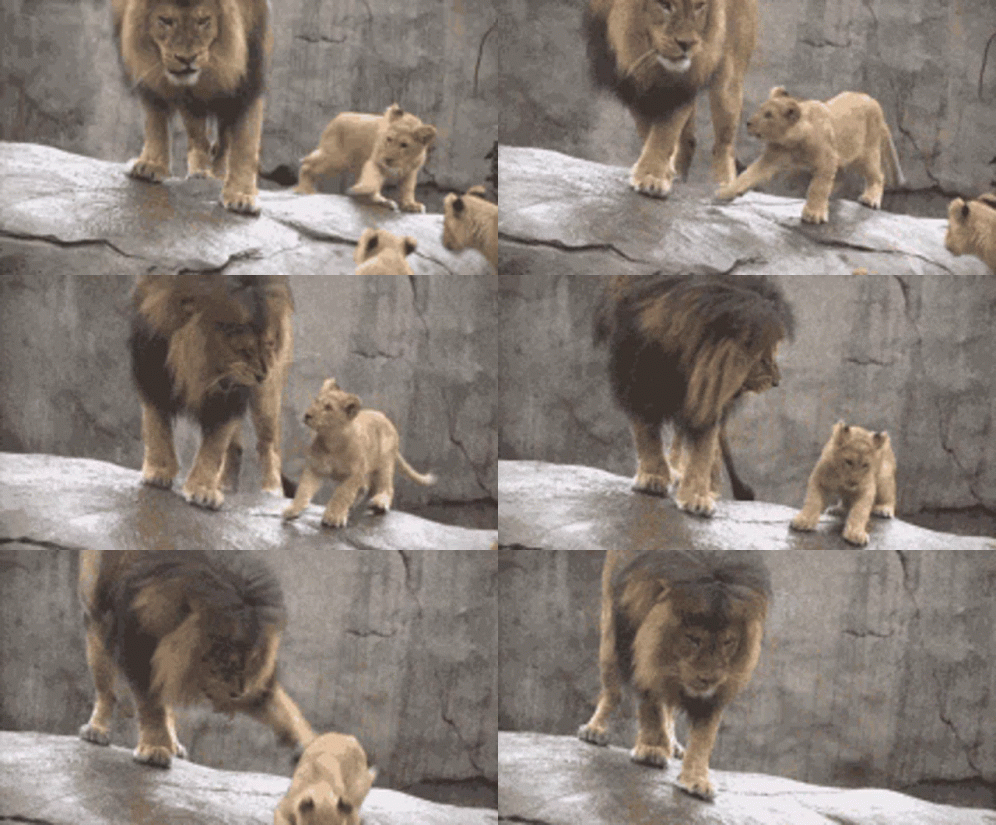
Fun Fact Friday: Rare Facts About Lions
Published by 🌼 Edelweiss 🌼

 EXPLORE . ADVENTURE . DISCOVER .