
RARE FACTS ABOUT RHINOCEROS
1. Ancient Species
Rhinoceroses are ancient creatures that have been around for millions of years. Their ancestors date back to the Eocene epoch, making them one of the oldest land mammals on Earth.
2. Unique Skin Patterns
Each rhinoceros species has a distinctive pattern of skin folds and wrinkles. These patterns are so unique that they can be used to identify individual rhinos, similar to human fingerprints.
3. Thick Skin
Rhinoceros skin is incredibly thick, with some parts measuring up to 2 inches (5 centimeters) in thickness. This tough skin helps protect them from thorns, branches, and insect bites.
4. Poor Eyesight
Rhinos have relatively poor eyesight and rely more on their sense of smell and hearing to detect potential threats. They may have difficulty seeing objects at a distance.
5. Vocal Communication
Rhinos communicate with each other through a variety of vocalizations, including snorts, grunts, and squeals. These sounds can convey information about their mood and intentions.
6. Herbivores with Unique Teeth
Despite their massive size, rhinos are herbivores. They have large, flat teeth that are adapted for grinding and chewing tough plant material, such as grasses and leaves.
7. Horns Made of Keratin
The rhinoceros horn is composed of keratin, the same protein found in human hair and nails. Unfortunately, this has made them a target for illegal poaching.
8. Solitary or Social
Rhinoceroses can be either solitary or social, depending on the species. Some, like the white rhinoceros, are known to form small groups, while others, like the Sumatran rhinoceros, are typically solitary.
9. Speed and Agility
Despite their large size, rhinos are surprisingly fast and agile. They can run at speeds of up to 30 miles per hour (48 kilometers per hour) for short distances.
10. Vulnerable and Endangered
Rhinoceros populations have been severely threatened by habitat loss and poaching for their horns. Several species are classified as critically endangered, making conservation efforts crucial to their survival.
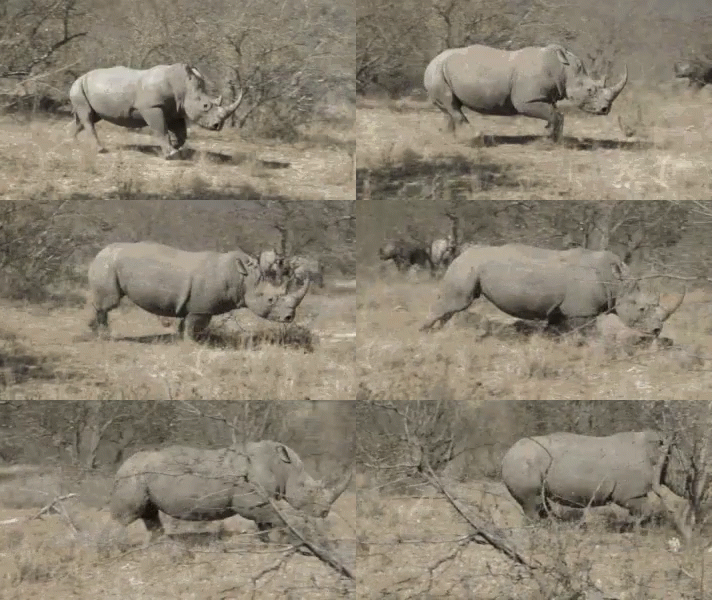
Fun Fact Friday: Rare Facts about Rhinoceros
Published by 🌼 Edelweiss 🌼

 EXPLORE . ADVENTURE . DISCOVER .