
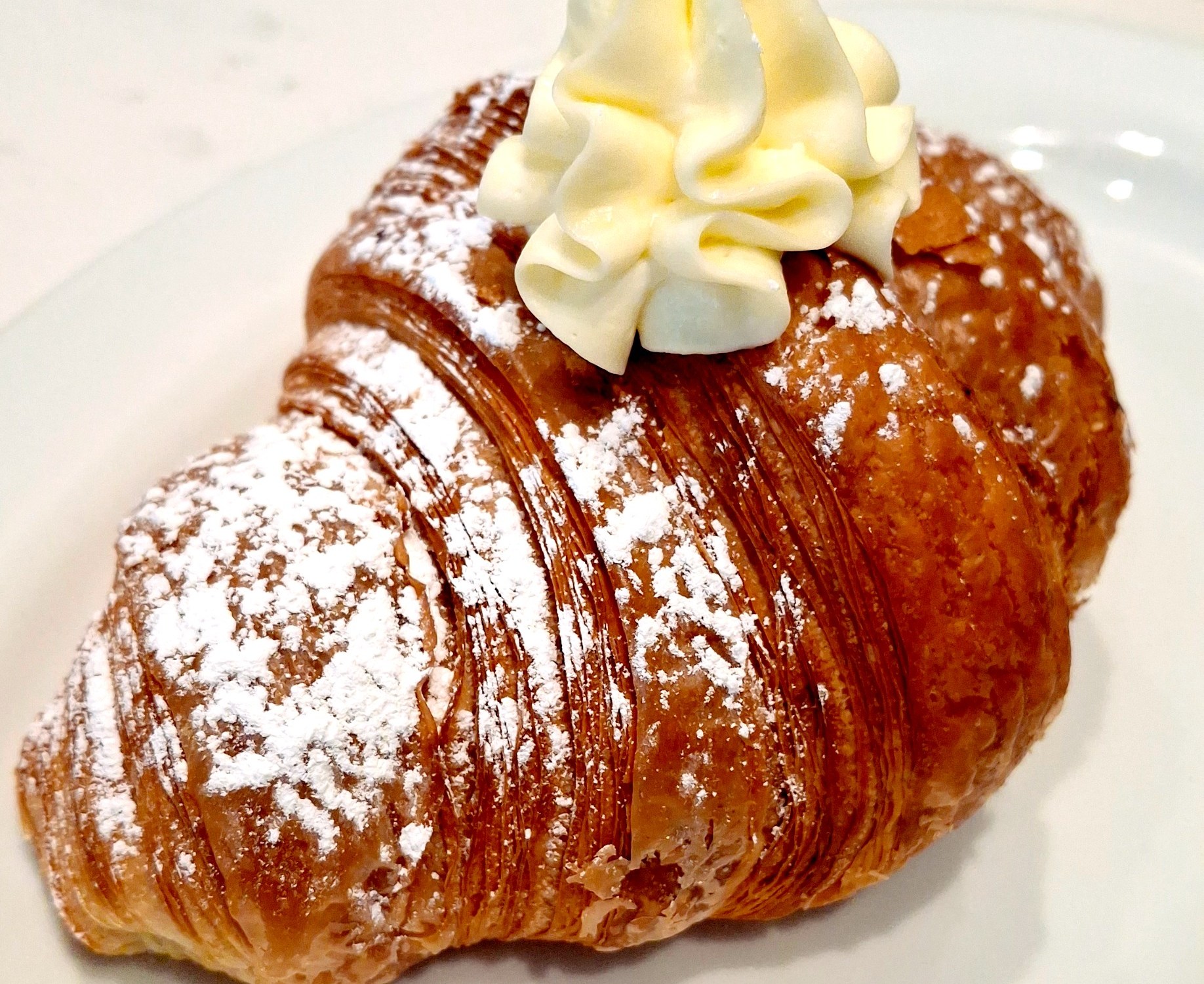
My daughter’s obsession with croissants started with the real thing—the flake, the butter, and the crunch. She became so obsessed with hunting down the perfect one that when I eventually found a cute croissant plushie, I had to get it for her to match her favorite snack.
She is now our ‘Self-Appointed Croissant Consultant.’ But as she was alternating between a chocolate croissant and a butter one today, I realized she had no idea her favorite treats were actually born out of 17th-century psychological warfare.
Beyond the layers, the history of the croissant is actually wild. Here are 5 rare facts that changed the way we look at our morning pastry.
1. The Spy Bakers of 1683 🕵️♂️
Most people think croissants are French, but they actually trace back to the 1683 Siege of Vienna. While the city was under attack, Ottoman troops tried to tunnel under the walls at night.
Who was the only person awake to hear the digging? The bakers. Working in basement kitchens, they heard the tunneling, sounded the alarm, and saved the city! The crescent shape was created as a “victory trophy” so citizens could symbolically “eat the enemy’s symbol.”
2. The Shape is a Secret “Code” 🧈
Next time you’re in a French bakery, look at the shape. There is a traditional “Baker’s Code” still used today:
- Straight Croissants: These are legally required to be made with 100% pure butter.
- Curved Croissants: These are often allowed to contain margarine or cheaper fats.
If you want the high-quality butter, go straight!
3. They Weren’t Always Flaky 🥐
The “shatter” of a perfect croissant is a modern luxury. For hundreds of years, croissants were more like heavy bread. It wasn’t until the 1920s that French bakers perfected lamination—the process of folding layers of cold butter into the dough to create those paper-thin layers.
4. The Marie Antoinette Myth 👸
People love to say Marie Antoinette introduced the croissant to France because she was an Austrian princess. While she did make Austrian pastries “trendy” at Versailles, the first actual croissant shop in Paris wasn’t opened until 1839 by an Austrian officer named August Zang.
5. They Aren’t Technically “Bread” 🥖
In France, croissants are in a league of their own. They are classified as Viennoiserie (things from Vienna). This category bridges the gap between a standard loaf and a fancy dessert.
The 2026 Pistachio Takeover: The “V” Effect
If you’ve noticed pistachio croissants everywhere lately, you can thank BTS V (Taehyung). During his 2025 trip to Paris, V was spotted at the legendary Cedric Grolet enjoying a pistachio croissant, and the internet went into a total frenzy. That single moment turned the bakery into a global pilgrimage site and officially solidified pistachio as the “it” flavor of the decade.
The Verdict: Chocolate or Classic?
We’ve come a long way from wartime victory trophies to the modern bakery case. My daughter’s verdict? The 1683 spies did us a favor, but the person who decided to put two bars of chocolate inside the dough (Pain au Chocolat) is the real genius.
Which fact surprised you most? And are you a “Classic” purist, or are you on Team Chocolate with my daughter? Let me know in the comments!

 EXPLORE . ADVENTURE . DISCOVER .