
Rare Facts About Fallow Deer
1. Polka-Dot Fawns
One of the most unique features of fallow deer is that their fawns are born with a distinctive set of white spots. These spots gradually fade as the fawn matures.
2. Four Coat Color Variations
Fallow deer are known for their striking coat color variations. They come in four main color phases: common (reddish-brown with white spots), menil (pale with few spots), melanistic (almost entirely black), and white (a rare albino variant).
3. Ancient Deer
Fallow deer have a long history of domestication and have been kept for ornamental and hunting purposes for thousands of years. They were first introduced to Britain by the Romans.
4. Matriarchal Society
Fallow deer often exhibit a matriarchal social structure. Female deer, known as does, form small family groups, while males, or bucks, are more solitary and territorial.
5. Vocalization
Fallow deer are known for their variety of vocalizations, including grunts, bleats, and “groaning” sounds during the rutting season. These vocalizations play a crucial role in their social communication.
6. Successful Invasive Species
Fallow deer have been introduced to numerous countries around the world for hunting and aesthetic purposes. In some regions, they have become invasive and pose challenges to local ecosystems.
7. Ecological Impact
Their browsing behavior has a significant impact on plant communities. Fallow deer can shape forest understories and influence the composition of plant species in the areas they inhabit.
8. Seasonal Rutting
Fallow deer exhibit a rutting season, during which males engage in fierce competition for mates. This behavior includes impressive displays of antler clashing and vocal calls.
9. Conservation Status
While fallow deer are not globally endangered, some localized populations, such as the Persian fallow deer, have faced significant threats and are considered endangered.
10. Hybridization
Fallow deer can hybridize with other deer species, such as the native red deer, leading to unique and genetically diverse populations in some areas.
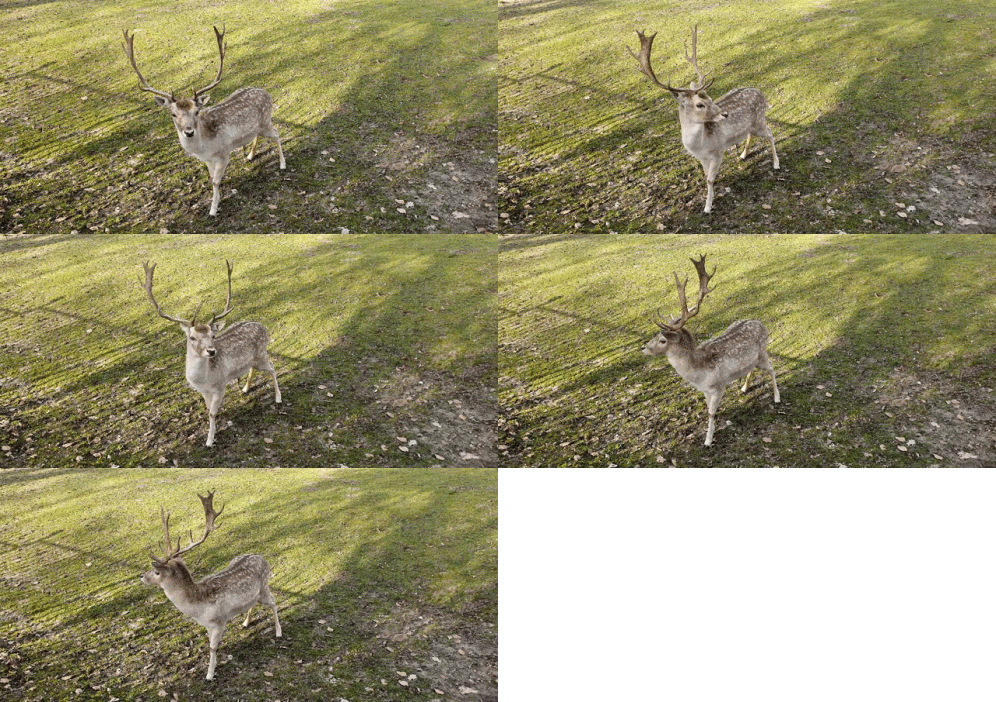
Fun Fact Friday: Rare Facts About Fallow Deer
Published by 🌼 Edelweiss 🌼

 EXPLORE . ADVENTURE . DISCOVER .